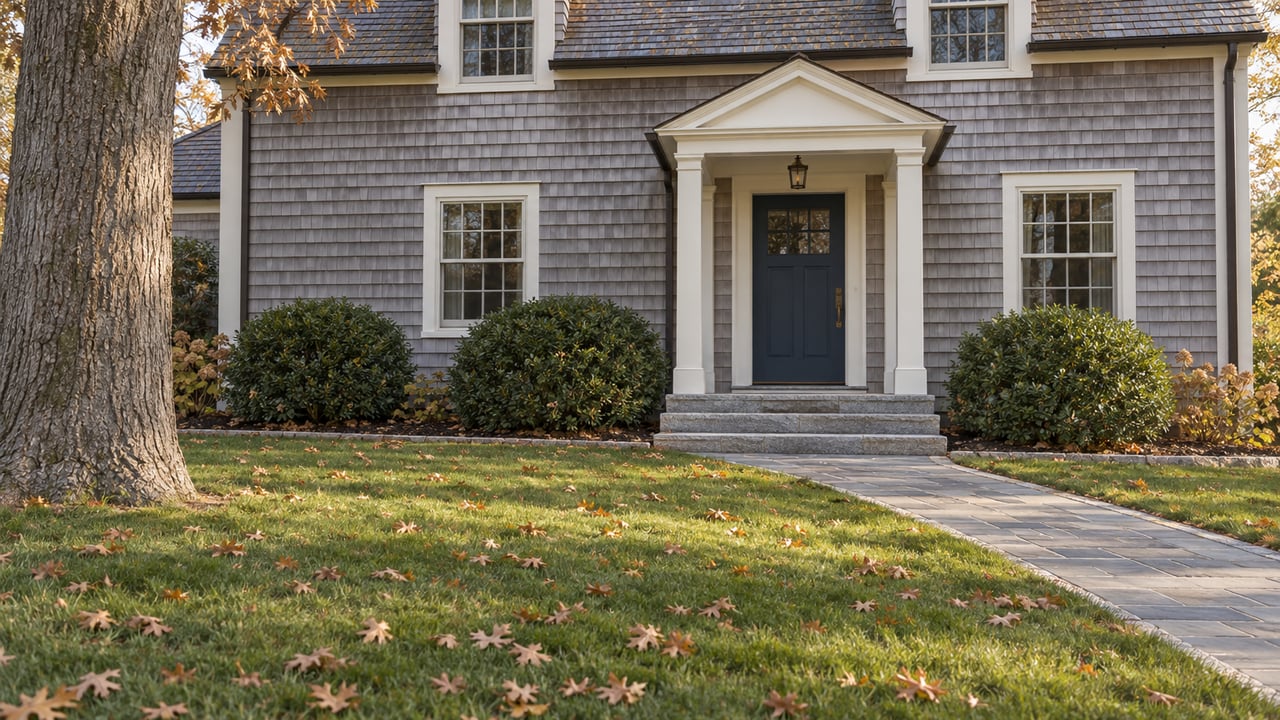
"Scheduling construction in the winter helps minimize impacts to park visitors and reduces potential disturbance to birds and other wildlife." That line comes from Audubon Connecticut's project FAQ. It explains why the first construction phase of the salt marsh restoration at Hammonasset Beach State Park is planned for the winter of 2026 to 2027.
That means the same features that make November through March a good time to walk Hammonasset also make it a good time to work on it. The park has fewer cars on the Boston Post Road entrance, the campground is empty, and the nesting birds are gone. The off-season is when the park gets repaired, and for this project, repairs start in the marsh behind the beach.
The Park After the Campground Closes
The campground closed at noon on Monday, October 12, and won't reopen until Friday, May 28, 2027. The park itself, at 1288 Boston Post Road, stays open every day from 8 a.m. to sunset. Several rules change with the season:
| Peak season | Off-season | |
|---|---|---|
| Leashed dogs on the beach | Not allowed | Allowed September 30 to April 1 |
| Leashed dogs in picnic areas | Allowed | Allowed |
| Out-of-state parking fees | April 1 to October 31 | None |
| Parking for Connecticut-registered cars | Free | Free |
During the season, out-of-state cars pay up to $22 on weekends and holidays. Once October 31 passes, the lots charge no one. Dogs are welcome on the sand again, but the Friends of Hammonasset note that park rules cap leashes at 7 feet.
The park is less crowded but still busy. Audubon Connecticut says Hammonasset draws more than three million visitors a year, the most of any park in the state. Winter is the only season when a construction crew and a park that size can share the roads.
What Is Happening to the Eastern Marsh
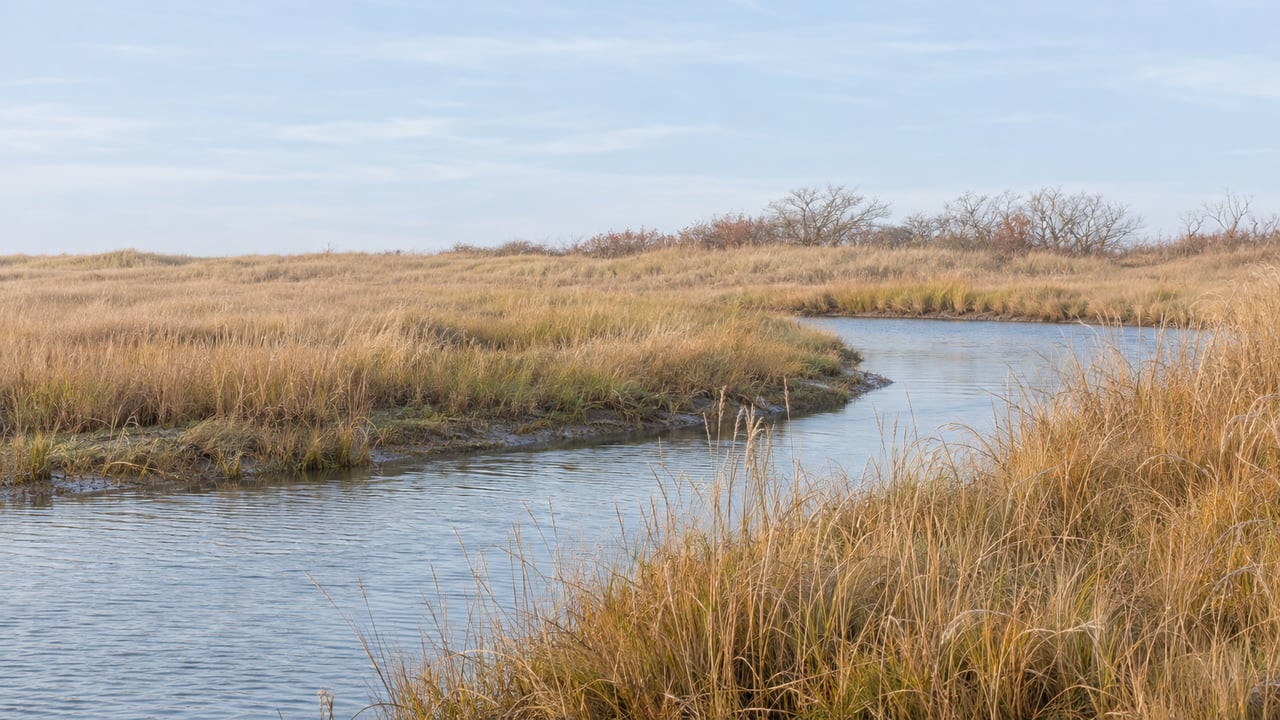
The project focuses on the park's eastern edge. That's where a 415-acre Natural Area Preserve runs along the boundary, and where the threatened saltmarsh sparrow, the piping plover, and the American oystercatcher have all depended on the habitat, according to CT Insider.
The erosion numbers show why the timing matters. Audubon Connecticut says the park has lost 27 acres of salt marsh since 1934, and that yearly erosion rates have nearly doubled over the last two decades. Spread across nine decades, 27 acres sounds like a slow loss. CT Insider reported in November 2025 that erosion now takes marshland at up to 9 feet a year.
That loss has already moved the birds. Audubon's FAQ says piping plovers, least terns, and American oystercatchers once nested in the Natural Area Preserve. As their habitat there eroded, they moved to Cedar Island. The FAQ also says the work isn't expected to affect Cedar Island, and that sediment modeling found the effects of work in the preserve on the island would be negligible.
Funding for the first phase came from just over $2.6 million in congressionally directed spending in the 2024 Omnibus Appropriations Bill. U.S. Sens. Chris Murphy and Richard Blumenthal worked with Audubon Connecticut to secure it, the Hartford Courant reported. The Courant reported that once the restoration is done, it's meant to reduce erosion and marsh loss along 3,000 feet of coastline.
Why the Culverts Go First
Before anything reaches the shoreline, the project starts under the park roads. CT Insider described the current culverts as 5-foot steel pipes that are rusting and too small. At high tide, water flows over them, which erodes the creek channels around them, and the narrow openings limit how much saltwater moves in and out of the marsh.
Widening the culverts from 5 to 8 feet means "they'll be able to withstand more frequent, powerful storms and water flowing in with the sea level rise and climate change," Jack Matthias, Audubon Connecticut's coastal resilience manager, told CT Insider. Audubon's project StoryMap lists 8-foot box culverts and multiple smaller culverts as options.
Audubon's FAQ says its modeling shows the design won't increase upstream flooding, and that the new culverts should improve marsh drainage, so any upstream water is expected to drain faster than it does now.
The same thinking applies to the marsh itself. When natural channels and elevations are restored, the FAQ says, tides move through winding creeks instead of straight, fast-draining ditches. The water stays on the marsh longer, so it's absorbed instead of rushing back out.
The Longer Sequence
The culverts are only the first visible step. Here's the full plan as Audubon and CT Insider describe it:
- Design and public input. Audubon Connecticut and CT DEEP led the first phase of site assessments and design. Public engagement came next, including a presentation at E.C. Scranton Memorial Library in December 2025. Audubon's project page still links to a comment form for questions about the work.
- Permits. Approvals come from several agencies, including local conservation and shellfish commissions, CT DEEP, and the U.S. Army Corps of Engineers.
- Culvert replacement, expected in the winter of 2026 to 2027.
- A dune or living shoreline along the preserve. These options use natural and engineered features such as reef balls, oyster castles, or rock sills to absorb waves and push sediment back into the marsh. CT Insider reported that this phase depends on future fundraising, with designs expected by August 2027.
- Adaptive management. Audubon plans to stay on the project for one to three years after completion, then hand it to the state.
The living shoreline idea has a Connecticut precedent. At Stratford Point, reef balls installed in 2014 collected about a foot of sediment behind them within two years. About 30,000 spartina plugs were planted there between 2014 and spring 2025, and intertidal marsh grew strongly behind the reef balls. Audubon says the lessons may carry over to Hammonasset, though the approach may need to change for local conditions.
What a Winter Walk Covers Now
Much of what the project hopes to change can be seen on a winter walk. Willard's Island Nature Trail, a 1.1-mile paved loop through the salt marsh, runs past the kind of habitat the project is meant to protect.
The straight channels cutting across the marsh are mosquito ditches dug in the 1930s, CT Insider reported, and filling some of them is one of the options under study. Audubon's FAQ adds that by 1950, about 90 percent of marshes from Maine to Virginia had been ditched. It also says no final decision has been made on which Hammonasset ditches, if any, will be filled.
For a guide, the Audubon Shop's last Fall Migration Bird Walk at Hammonasset of 2026 is this Saturday, November 21, from 8 to 10:30 a.m. Walkers meet Jerry in the shop's parking lot at 7:50 a.m. and carpool to the park. The walk costs $6 cash per person, with no registration needed and beginners welcome, and binoculars rent for $4 if you call ahead. Pouring rain cancels the walk, and the shop takes weather calls on Fridays at 203-245-9056, according to the Connecticut Ornithological Association listing. The listing says late-season walks can turn up hawks, eagles, owls, and shorebirds pushed toward the coast by westerly winds.
Meigs Point Nature Center lists its hours as Tuesday through Sunday, 10 a.m. to 4 p.m., with free admission. The nature center is also Audubon's summer partner. This year they ran free Salt Marsh Days together, including Diamondback Terrapin Day on July 18 and Terns of the Marsh Day on August 15, with an Audubon table explaining the restoration. The summer events introduced the project to visitors. The construction itself is planned for the cold months, and Audubon's FAQ says the marsh will take time to recover afterward as native plants grow back and bird populations, it hopes, gradually increase.
For updates on the culvert work, Audubon Connecticut's project page has a sign-up link, and the park's main office is at 203-245-2785.
Hammonasset is part of what makes Madison's east end feel the way it does, and our team follows changes at the park closely. If you're thinking about how the shoreline near the park may change in the coming years, Cathy Lynch & Team would be glad to talk it through. Schedule a no-pressure consultation with a Shoreline expert.