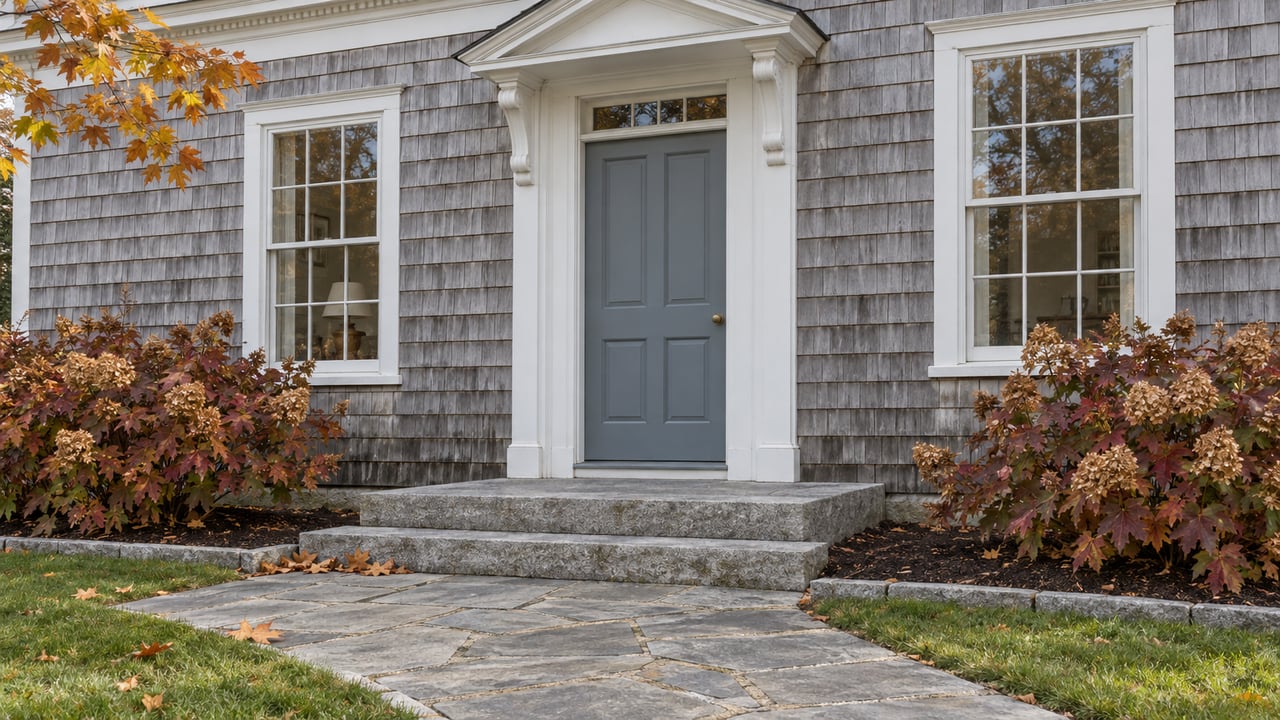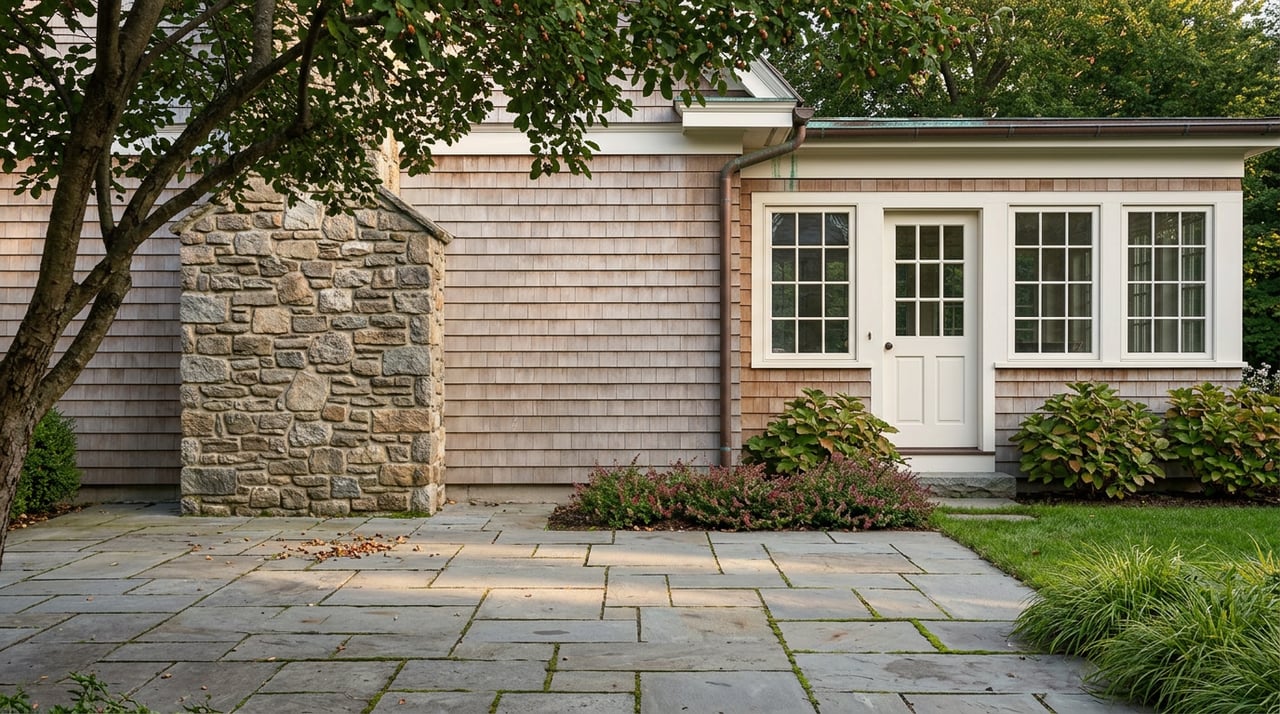
Two houses can sit on the same block in Guilford's Whitfield Street Historic District, share the same building era, the same shingle siding, even the same real estate agent walking clients through both. Yet one owner spends months waiting on a Certificate of Appropriateness before touching a window, while the other adds a screened porch facing the water that may, under Guilford's historic-district ordinance, fall outside the visibility test. The difference isn't luck. It's written directly into the ordinance.
Most people buying or selling a historic home near Guilford Green assume "historic district" means every square inch of the property answers to a commission. That assumption is wrong in a specific, useful way, and understanding where it applies can help you plan a renovation timeline before closing.
The Rule Covers What Is Visible from Public Streets, Ways, or Places
Guilford's Historic District Commission, created under Town Code Chapter 187, governs two local historic districts: one wrapping parts of the village center, the other along Whitfield Street below the Green. Inside either district, no building permit and no demolition permit can be issued for any exterior architectural change until the HDC has approved it with a Certificate of Appropriateness, whether or not the town would otherwise require a permit at all for that kind of work. Unlike some advisory boards that only offer recommendations, the HDC's decisions are legally binding on the town.
But the ordinance defines its own reach narrowly. It only regulates "exterior architectural features," meaning the part of the structure visible from a public street, way, or place. That phrase is doing more work than it looks like at first read, and Whitfield Street is where it gets interesting.
The West River Carve-Out
The ordinance text governing the Whitfield Street Historic District contains a specific exception: for purposes of that district, "public street, way or place" does not include the West River. In plain terms, a change to the side of a house facing the river doesn't automatically trip the same visibility test that a change facing the actual street does.
The West River exception is one detail to consider when evaluating a river-facing project. For a buyer eyeing a Whitfield Street property with an eye toward a rear addition, a new dock structure, or reconfigured river-facing windows, the exception can affect whether HDC review applies and, if it does, when the project can be considered. The Guilford Historic District Commission meets once a month, on the third Wednesday, at the Community Center. Missing that month's agenda can delay a project.
This is also why a pre-offer conversation with someone who has actually walked this process matters more than a listing photo. The same house can have two renovation timelines depending entirely on which elevation the work touches.
The Green Has Its Own, Looser Track
Confusingly, Guilford also has a Church Street Village District, and it runs on a completely different set of rules. The Guilford Preservation Alliance explains that Village Districts are created under state statute Section 8-2j and reviewed by the Planning and Zoning Commission, not the HDC. No approval from the property owner is required to create one, and once it exists, projects are reviewed by an Architectural Review Board or a PZC-contracted consultant for compatibility with the neighborhood's scale, massing, and sightlines, not measured against the formal Certificate of Appropriateness standard.
The Visit Guilford's resource guide to historic homes notes that the HDC can also weigh in on Special Permit or site plan applications near National Register districts if the PZC asks it to, but those recommendations are advisory only and don't bind the outcome. That's a meaningfully softer track than the true historic districts, and buyers sometimes conflate the two because both carry the word "historic" in casual conversation.
Here's how the three paths actually compare:
| Review Path | Who Decides | What Triggers It | Review Outcome |
|---|---|---|---|
| Historic District (HDC) | Guilford Historic District Commission | Exterior architectural features visible from a public street, way, or place, subject to the Whitfield Street exception | Binding decision |
| Church Street Village District | Planning and Zoning Commission | Compatibility with neighborhood character, scale, massing | Compatibility review |
| Advisory review near National Register districts | HDC, at PZC's request | Special Permit or site plan applications | Advisory recommendation |
What Just Got Faster, And What Didn't
Guilford's permitting process changed this summer in a way that matters for anyone closing on a fixer-upper. The Town of Guilford Planning and Zoning Department says that, as of July 15, 2026, the town eliminated the requirement for a separate, pre-approved Zoning Permit before applying for a Building Permit. Applicants can now submit the Building Permit application directly, with zoning review happening inside that same process rather than as a standalone front-end step. Projects that were already submitted before that date still finish out under the old two-step process.
That change shaves a step off the timeline for ordinary renovation work townwide. It does not touch the Certificate of Appropriateness requirement inside the two historic districts. If your project needs HDC sign-off, the Building Permit still can't be issued until that Certificate exists, streamlined zoning process or not. The two systems run in parallel, and conflating them is an easy way to misjudge how fast a historic-district renovation can actually move after closing.
Applications now go through the town's online Civic Access Portal only, and anyone with questions can reach the Planning and Zoning office through Town Planner Anne Hartjen's posted office hours, Wednesdays from 10 a.m. to 2 p.m.
If You're Weighing A Teardown Instead
Some buyers looking at an aging Guilford property aren't planning a renovation at all. They're pricing a full rebuild. That's where the town's Demolition Delay Ordinance, adopted by the Board of Selectmen in 2005, becomes the relevant document instead of the HDC rules.
The ordinance applies to any building or part of a building over 500 square feet that appears on the 1981 State of Connecticut Historic Resources Inventory for Guilford, as amended over time. The Guilford Preservation Alliance notes that the inventory covers somewhere between roughly 450 and 680 structures, depending on which town-affiliated list you check, a discrepancy worth knowing about rather than a settled figure. Filing a demolition permit application on one of these properties triggers a mandatory 90-day waiting period, and within seven days the applicant has to mail notice to the HDC, the Guilford Preservation Alliance, and the Town Historian. If nobody files written opposition within 30 days of the legal notice, the remaining wait can be waived and the permit issued early. If someone does object, the full 90 days runs its course, after which the owner can still proceed if no alternative to demolition has been reached.
For a buyer comparing a gut renovation against a teardown on a listed property, that 90-day clock, and the possibility of shortening it, belongs in the offer strategy conversation before the inspection contingency, not after.
Sequencing It Before You Write An Offer
None of this changes whether a historic Guilford home is worth buying. It changes when you should ask which rules apply. A property inside the Whitfield Street district facing the river deserves a different pre-offer conversation than one facing the street. A Church Street Village District property runs on PZC review, not HDC approval, and sellers can help set buyer expectations by explaining that distinction during due diligence.
For sellers, this is also a marketing opportunity rather than just a compliance hurdle. A house where the seller can point to which elevations already have HDC approval, or where the demolition delay inventory status is already confirmed, moves through underwriting and buyer due diligence with far less friction than one where nobody has asked the question yet.
A Short FAQ
Does the Certificate of Appropriateness process cover interior renovations? No. The ordinance is written around exterior architectural features visible from a public street, way, or place. In the Whitfield Street Historic District, the West River is excluded from that visibility test. Interior work generally falls outside HDC review unless it changes something visible from outside.
If my home isn't on the 1981 inventory, does the demolition delay ordinance still apply? The ordinance is tied specifically to buildings listed on that inventory as amended. Confirming a property's status is worth doing directly with the town rather than assuming either way.
Does the July 2026 permitting change apply inside the historic districts too? It applies to the Zoning Permit step townwide. The separate Certificate of Appropriateness requirement inside the historic districts still has to be satisfied before a Building Permit can be issued, regardless of the zoning process change.
If you're evaluating a historic property near Guilford Green, or getting ready to list one, the rules that apply depend on which elevation you're changing and which district line the house sits inside. Cathy Lynch & Team has walked this exact process with Shoreline sellers and buyers before. Schedule a no-pressure consultation with a Shoreline expert before you write the offer or set the price.
This article is general information, not legal, tax or financial advice. Consult a qualified professional about your situation.